Friday, 6 March 2026
Sushi Sushi’s next chapter: what Genki’s global backing could mean for New Zealand franchisees
New Zealand’s franchise sector has long been a proving ground for strong systems and disciplined operators. With New Zealand now home to an estimated 546 franchisors and 27,295 franchise units, the market is deep, competitive, and increasingly sophisticated.
Against that backdrop, Sushi Sushi’s acquisition by Japan’s Tokyo Stock Exchange-listed Genki Global Dining Concepts (GGDC) is more than a routine ownership change. It’s a signal that a proven Australasian QSR is now being scaled with serious international capability behind it, and that New Zealand is part of the growth plan.
The transaction has been reported as more than A$160 million, underscoring the value placed on Sushi Sushi’s operational platform and growth runway.
Why this matters to the NZ franchise sector
New Zealand franchising is sizeable and resilient: the Franchising New Zealand 2024 Report estimated sector turnover rose $10.4b to $47.2b
In practical terms, that means:
Franchise buyers are educated and compare systems carefully.
Landlords and retail centres understand what good franchise operations look like.
Support expectations are higher, especially in QSR where food safety, labour, and consistency are non-negotiable.
A global acquirer with deep sushi category experience will lift the bar further, particularly in procurement, product development, and customer-facing technology.
The NZ plan is already on the table: 35 stores in 10 years
Sushi Sushi’s New Zealand expansion hasn’t been hypothetical. The brand has signed a master franchise agreement with Stanley Greene (with long experience in franchising), with an ambition publicly stated as 35 stores over the next decade.
For prospective franchisees, that matters because it suggests a structured rollout plan – typically a healthier pattern than scattered one-off openings.
What “global backing” can translate to in a franchise system
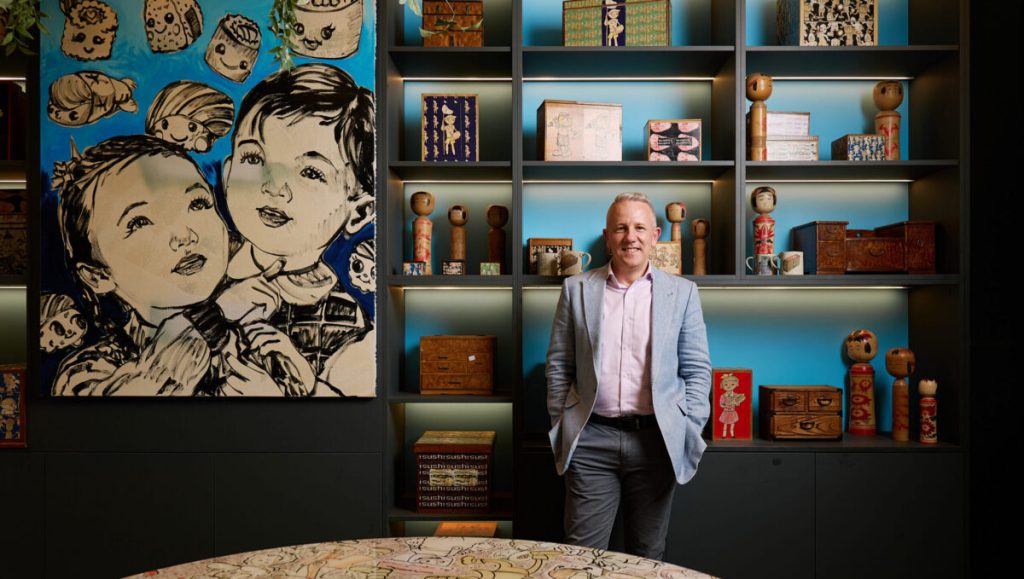
In his message to market, Sushi Sushi CEO Stephen Anders described the deal as “a defining moment,” pointing to the fundamentals required to build a high-performing platform: disciplined growth strategy, inspiring retail environments, tech that simplifies the customer journey, and insight-led improvement – powered by franchise partners and teams.
Sushi Sushi’s continued success is driven by a differentiated operating platform through distinctive, award-winning store designs, category-leading commitment to premium ingredients and a world-class food safety programme. These differentiating elements combined with the brand’s Art of Sushi Sushi local artist collaboration program deliver an elevated consumer experience.
What may that look like in day-to-day franchise reality?
1) Procurement and menu development strength
Sushi Sushi has explicitly positioned the acquisition as unlocking access to authentic Japanese procurement and menu development.
For franchisees, category-strength procurement can mean improved supply reliability, more consistent product specs, and faster innovation cycles (while still being adapted locally to NZ supply and regulations).
2) Customer-facing technology that actually moves the needle
Sushi Sushi has also flagged “advanced customer-facing technology” as part of the upside of joining Genki.
In modern QSR, technology isn’t just “nice to have”, it influences ordering speed, loyalty, marketing effectiveness, and repeat purchase behaviour.
Sushi Sushi has announced its new customer loyalty program Koi Club, designed to deliver meaningful rewards.
Sushi Sushi CEO New Zealand Stan Greene said “Koi Club is named after the Koi Fish often associated with good fortune. The program enables customers to automatically accrue points by scanning in-store or using the app to order.”
“Koi Club isn’t built around complicated tiers or hard-to-reach milestones. It’s designed for people who love our food and visit regularly”.
“Koi Club allows us to know them better and give back valuable rewards – as a thank you for choosing Sushi Sushi.”
“Roll-out of the new customer thank you / loyalty program is scheduled for Q2 of this year,” Greene said.
3) A sharper expansion playbook
Baker McKenzie (advising on the acquisition) described the move as part of GGDC’s international growth strategy, with Sushi Sushi providing a strong position through its ~180-store Australian footprint and expansion into markets including New Zealand.
For NZ franchisees, alignment matters: global ownership can accelerate brand investment when the parent company’s strategy and the local rollout are pulling in the same direction.
The format: why Sushi Sushi has scaled (and why NZ franchisees are looking at it)
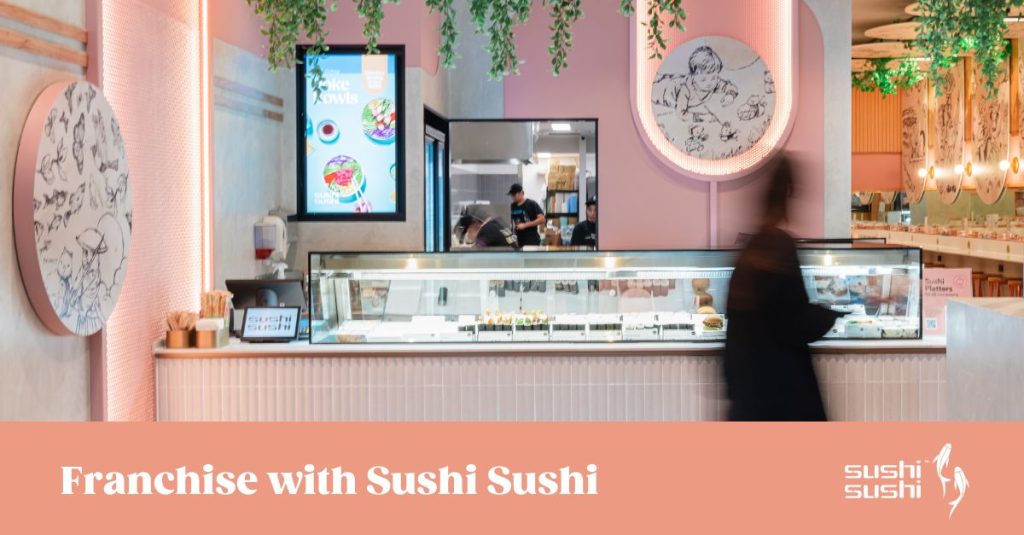
Sushi Sushi has built a reputation around “grab-and-go” execution, particularly in high-footfall retail environments. It also promotes multiple store formats – important for NZ where site types vary widely between malls, street-front retail, and transport precincts.
On the brand’s franchise materials, Sushi Sushi describes three store formats and outlines fit-out investment ranges for different store types (noting these figures are presented in the Australian context).
The core franchise proposition also emphasises structured onboarding and ongoing support and training, site selection guidance, marketing support, and operational coaching.
For potential franchisees, “format flexibility + strong support” is often what makes a concept viable across both major metros and growth centres.